- tactics
- analysis
- water-polo
Reading the 6-on-5 — Where Power Plays Are Won
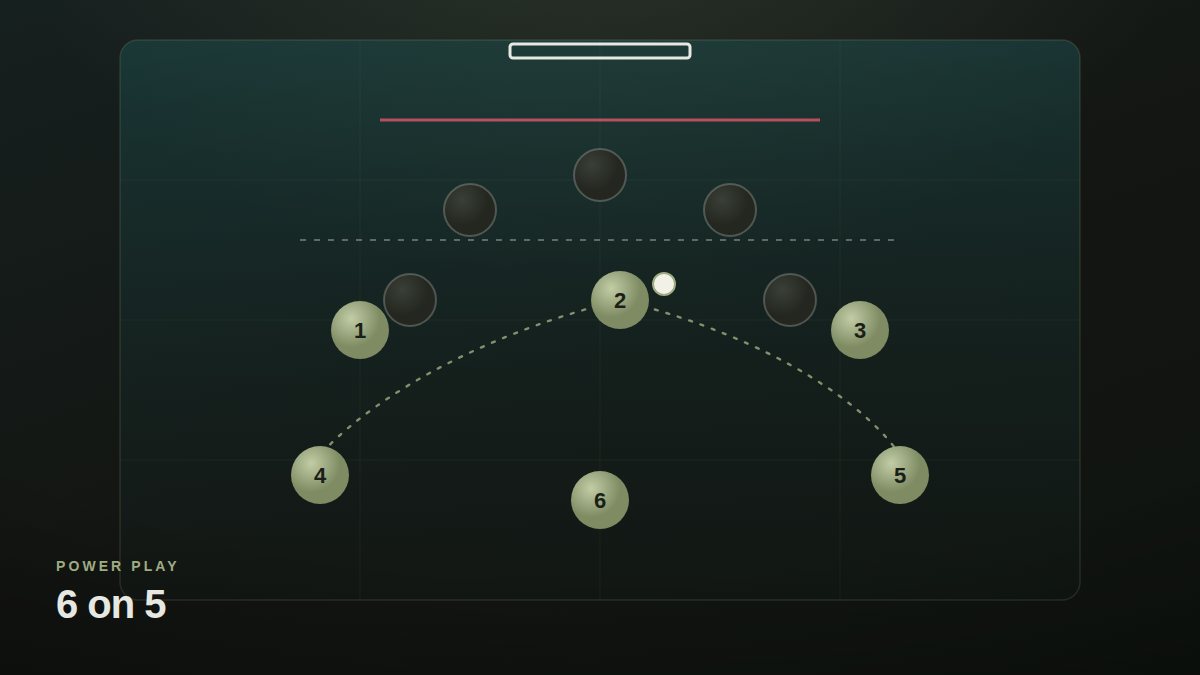
A single exclusion swings a water polo match more than almost any event in team sport. For twenty seconds you have a six-on-five — and how you use those seconds, over a season, separates the teams that medal from the teams that do not.
The problem is that power plays feel chaotic. The ball moves fast, the defence shifts, and it is hard to tell from the bench whether a goal came from a good system or a lucky finish. That is exactly the kind of question data answers well.
The four questions that matter
When Kouci breaks down a man-up, it starts with four numbers:
- Conversion rate — goals per power play. The headline, but the least useful on its own.
- Shot location — where the shot was actually taken from.
- Time to shot — how long the possession lasted before the attempt.
- Entry side — which side the ball entered the 5-metre from.
Individually these are interesting. Together they tell a story.
A worked example
Imagine a team converting at 48% — respectable. But the breakdown shows:
| Entry side | Conversion |
|---|---|
| Left | 61% |
| Centre | 44% |
| Right | 29% |
The right side is dragging the whole power play down. Maybe the shooter there is rushed; maybe the cross-pass is too slow and the defender recovers. Either way, you now have a specific thing to fix in training — not a vague "work on the man-up."
The average hides the lesson. The split reveals it.
Time is a tell
Time-to-shot is the most underrated power-play stat. Teams that shoot in the first eight seconds usually do it off a designed movement. Teams that shoot at fifteen-plus seconds are often improvising because the first option failed.
Neither is wrong — but if 70% of your goals come late, your set play is not creating the early look you drew up. The whiteboard says one thing; the pool says another.
From numbers to plays
This is where the statistical and the tactical sides meet. Once you know where and when you score, you can:
- Animate the set play that produces your best early look.
- Rehearse the secondary option for when the first is taken away.
- Brief the right-side shooter on the specific pass timing that is costing goals.
That loop — measure, draw, rehearse, re-measure — is what Kouci is built to make fast.
Want your own power plays broken down like this? It is one of the first things Kouci does. Join early access and we will get you set up.